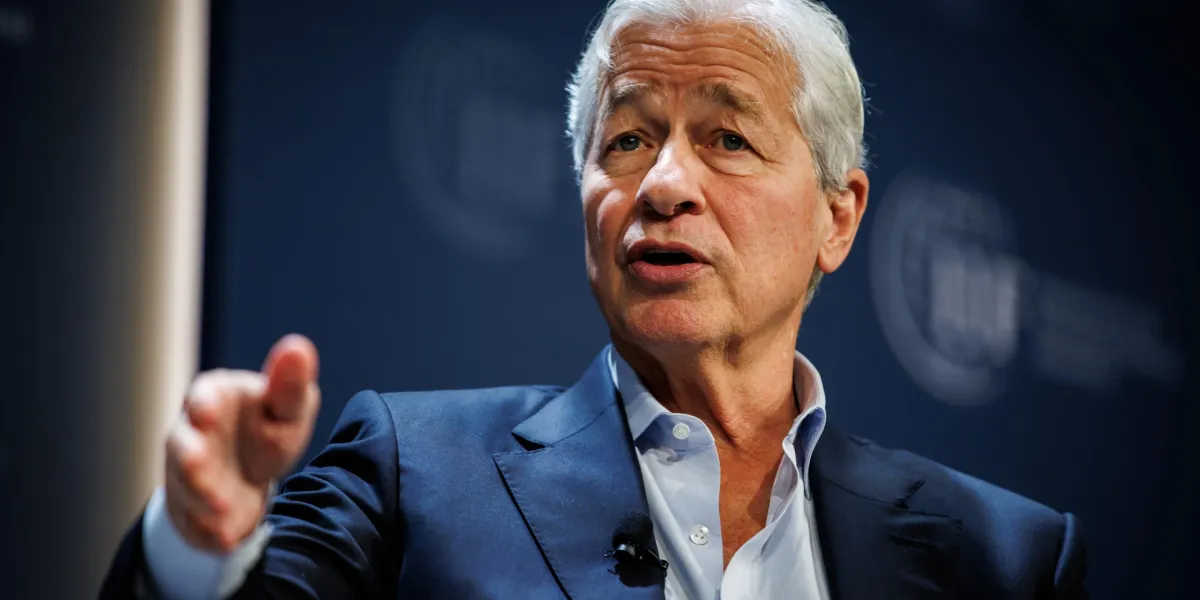
In an era marked by volatile geopolitics and economic uncertainty, Jamie Dimon, the CEO of JPMorgan Chase, has emerged as a powerful voice in financial discussions, particularly in his annual letter to shareholders. His recent communication does more than echo sentiments of the financial community; it articulates a stark reality that the global economy finds itself in uncharted territory. With the ongoing U.S. involvement in international conflicts, Dimon presents not only a warning but also an analysis of potential repercussions for various sectors, investment strategies, and the overall economic landscape.
Current Economic Context: A Shifting Paradigm
As we delve deeper into the implications of Dimon’s assertions, it becomes imperative to understand the economic landscape in which they are appointed. The end of the Cold War initially ushered in an era of globalization characterized by interconnected supply chains and low inflation. However, substantial geopolitical threats, particularly stemming from conflicts such as those in Ukraine and Iran, have begun to unravel these post-war economic assumptions.
Geopolitical Turmoil and Economic Strain
Since the Ukraine war was ignited in 2022, Dimon has consistently related geopolitical incidents to economic ramifications. The situation in Ukraine has been highlighted as a catalyst for potential restructuring of the global order. Fast forward to 2024, and the ramifications of the Silicon Valley Bank (SVB) crisis further complicate the landscape with dire warnings about inflation and liquidity. This year marks a pivotal point; the U.S. is no longer a mere observer but an active participant in the Iranian conflict, leading to unprecedented economic uncertainty.
Dimon’s Case for Engagement in Iran
Dimon articulates a vigorous defense of U.S. engagement in Iran, dismissing claims that frame it as a choice rather than a necessity. He points to the long-standing Iranian regime’s threats, particularly its activities around the Strait of Hormuz, as critical push factors for this involvement. Dimon denotes nuclear proliferation as a menacing challenge: “If Iran acquires a nuclear ballistic missile, it would represent the gravest threat to the future of mankind.”
The Short-term and Long-term Costs
Dimon acknowledges that the effective management of the Iran conflict is paramount for both short-term objectives and the region’s long-term stability. However, he does not shy away from acknowledging the high costs that might accompany this military engagement, emphasizing that the economic toll could eclipse previous forecasts.
The Economic Toll: Projections and Warnings
Dimon’s economic evaluations painting a grim picture resonate with other prominent industry leaders. The war’s immediate effects signal potential “significant ongoing oil and commodity price shocks,” leading to persistent inflationary pressures and heightened interest rates than predicted.
Impacts on Oil and Commodity Prices
According to Dimon, the ramifications extend beyond energy to agricultural and industrial sectors that rely on commodities derived from oil and gas. These sectors face potential disruptions in processes vital for production, including shipbuilding, food supply, and farming. Dimon is not alone in this assessment; major firms like BlackRock and Goldman Sachs echo similar concerns. BlackRock’s Larry Fink warns of the recession risks associated with oil prices hitting $150 a barrel if the conflict continues. Goldman Sachs has also revised projections, raising the recession risk to 30% in a prolonged conflict scenario and calling for adjustments in the U.S. growth forecast.
Sectioning the Potential Outcomes: A Mixed Bag of Reactions
The reaction to Dimon’s warnings is not unanimous. Some, like Ed Yardeni, continue to express optimism for the S&P 500 year-end target, implying that impending clarity regarding the conflict in Iran may mitigate recession risks. This tempered optimism signifies that investors remain divided on the interference of geopolitical factors on market stability.
Vulnerabilities in the Current Economy
Dimon’s acute observations extend to the broader economic picture, identifying vulnerabilities within the U.S. economy. While consumer spending remains robust, it is evident that recent trends indicate a “weakening.” The economy leans heavily on government deficit spending and past stimulus, a precarious foundation amidst turbulent geopolitical landscapes.
Opportunities and Risks in an Unstable Environment
As the economy grapples with uncertainty, it is vital for investors to analyze both the opportunities and inherent risks presented by Dimon’s insights. Markets can be strongly influenced by international relations, including potential recovery phases and adjustments in trading routes that could benefit certain sectors.
Investment Advice Moving Forward
- **Commodity Investments** – Following the trends in oil and other essential commodities, investors should aim to balance their portfolios by considering best investments in these sectors to hedge against inflation.
- Stock Market Today – Caution is advised in stock selection, as market reactions to geopolitical developments could yield volatility, making diversified portfolios essential.
- **Crypto Investing** – The rise of cryptocurrencies presents opportunities for profit but carries risk. Investors should weigh their investment advice against these market fluctuations, especially as they relate to traditional assets.
What Does This Mean for Interest Rates in 2026?
The implications of Dimon’s perspective cannot be understated regarding interest rates. With inflation expected to remain sticky, rate increases may become a norm, reshaping the landscape for borrowing costs. Investors should consider how elevated rates can impact not only market liquidity but also amplify risks within both portfolio management and retirement planning.
Conclusion: Looking Ahead to Future Economic Landscapes
In summary, Jamie Dimon’s insights provide a critical lens through which we can view the interplay between geopolitical affairs and economic stability. The evolving landscape necessitates vigilance as markets adapt to new realities born from both military engagements and economic strategies. Understanding the complexities at play—be it inflationary pressures, changing interest rates, or commodity markets—will be crucial for investors and consumers alike.
As we venture deeper into 2026, a keen eye on geopolitical developments accompanied by a diversified investment strategy could bolster resilience against potential economic shockwaves, ensuring that proactive measures are in place to navigate what lies ahead.