The Rise of the Pistons and Spurs: A Closer Look at Coaching in the NBA
On Monday evening, I sat in my office with two screens, one showcasing the Spurs vs. Heat and the other broadcasting the Pistons vs. Lakers. As the postseason approaches, there is a universal recognition that every game counts, and it’s a perfect opportunity to scrutinize these high-profile matchups from a playoff perspective. Questions began to swirl in my mind:
Is Team X truly hitting their stride? Can Team Y adjust to an opponent’s adjustment in the second half? How does Team Z fare against a shapeshifting zone?
What I witnessed underscored the brilliance of both Detroit and San Antonio this season, not just in terms of their player rosters but, more importantly, in how their coaching has differentiated them from the rest of the league. Determining a singular “Coach of the Year” seems increasingly unfair, given the circumstances and achievements of these teams.
The Detroit Pistons: Resilience Personified
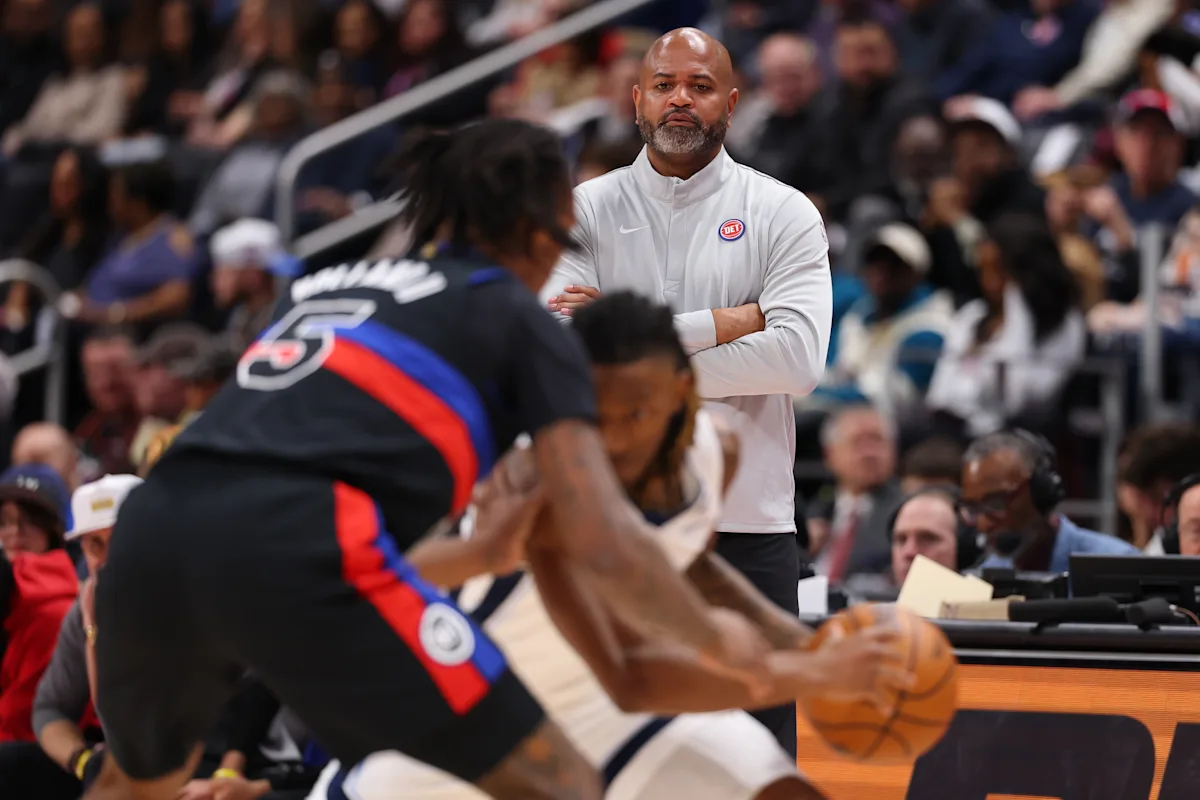
The Pistons, led by J.B. Bickerstaff, are a compelling case study in the NBA this season. They were without their star player, Cade Cunningham, recovering from a collapsed lung, yet managed to stifle the Lakers’ offense in the fourth quarter, limiting them to just 23 points—including an alarming 0-for-5 from the three-point range alongside seven turnovers.
Among the impressive performances, Daniss Jenkins shone brightly. An undrafted player who has seized the opportunity, he finished with 30 points on an efficient 11-for-18 shooting, adding in 8 assists and 4 rebounds. Jenkins’ emergence as a primary initiator highlights the adaptability and depth of the Pistons, pivotal traits in the high-stakes atmosphere of playoff basketball.
Moreover, Detroit’s defensive by-committee approach forced superstar Luka Dončić to labor for his points, allowing him to put up 32 but on a suboptimal 29 shots. The ability of Kevin Huerter and Jalen Duren to effectively contain Dončić in crucial late-game possessions demonstrates Bickerstaff’s strategic acumen, trust in his entire roster’s capabilities, and the overall preparation that defines their season.
San Antonio Spurs: Coaching Mastery
Meanwhile, the Spurs found ways to overcome their known weaknesses, particularly against zone defenses—an area where they had previously struggled. Against the Miami Heat, who deploy the most extensive zone defenses in the league, San Antonio astoundingly converted at a rate of 1.875 points per possession during spot-up situations, all thanks to strategic adjustments made by head coach Mitch Johnson.
By extending an eight-point lead into a 30-point cushion, the Spurs showcased their competitive fire. Dylan Harper and Keldon Johnson contributed 21 points each off the bench, and the Spurs’ systemic teamwork stifled Bam Adebayo, forcing him into a difficult shooting night of 18 points on 17 attempts. Scoring 136 points against one of the best defensive teams in the NBA further underlined how coaching and player development synergized this season in San Antonio.
The Essence of Coaching
In both games, coaching proved to be the element that elevated the teams above their competition. While talent remains crucial, the adaptability, strategic insight, and management of player roles and injuries can make the decisive difference in a season characterized by unpredictability.
High-profile players often receive accolades, but both the Pistons and Spurs have demonstrated exceptional performance even in the absence of their top stars. Detroit has an impressive 8-2 record without Cunningham, while San Antonio has gone 10-5 without Victor Wembanyama—a testament to their deep rosters and effective coaching strategies.
The Dilemma of Coach of the Year
As the end of the regular season approaches, the conversation surrounding the Coach of the Year (COTY) award grows more heated. The criteria for determining this prestigious title can be as fluid as the game itself, sometimes swayed by public narratives, media coverage, and personal biases. This season exemplifies the complexity, with numerous deserving candidates emerging from unexpected places.
To add depth to this discussion, one might consider establishing an All-Coaching team, similar to the All-NBA and All-Defensive teams. Such recognition would acknowledge the essential contribution coaches make in molding winning franchises. The selection process could be built around a few key criteria:
- Season Expectations: Evaluating how a team has performed relative to preseason projections.
- Talent Level and Development: Judging how well coaches have maximized the potential of their rosters.
- Player Availability: Acknowledging how coaches navigate injuries and personnel changes efficiently.
Proposed All-Coaching Team
Based on my methodology, here are the five candidates I would propose for an inaugural All-Coaching team:
J.B. Bickerstaff, Detroit Pistons
Vegas Preseason Win Projection: 46.5
Current Record: 52-19 (10th in offense, 2nd in defense)
Bickerstaff has orchestrated a remarkable turnaround for the Pistons, pushing a squad ahead of expectations into a contender. Balancing youth, experience, and a relentless defensive scheme, he’s done exceptionally well in leveraging his team’s talents while instilling a winning mentality.
Mitch Johnson, San Antonio Spurs
Vegas Preseason Win Projection: 44.5
Current Record: 54-18 (4th in offense, 3rd in defense)
Johnson has effectively translated Wembanyama’s potential into outstanding performances while simultaneously ensuring the commitment of veterans. The Spurs’ run in the NBA Cup finals and their impressive win streak speaks volumes about Johnson’s leadership and strategic direction.
Joe Mazzulla, Boston Celtics
Vegas Preseason Win Projection: 41.5
Current Record: 47-24 (2nd in offense, 4th in defense)
Amid expectations of a down season, Mazzulla has molded the Celtics into an offensive juggernaut and a reliable defensive unit. By redefining roles and optimizing matchups, he has guided his team through adversity with remarkable success.
Mark Daigneault, Oklahoma City Thunder
Vegas Preseason Win Projection: 62.5
Current Record: 57-15 (6th in offense, 1st in defense)
Despite facing significant injuries, Daigneault has cultivated an environment where younger players can thrive, developing talent while maintaining an elite defensive effort. His ability to create a competitive team from a depleted roster stands out as a testament to his coaching capabilities.
Charles Lee, Charlotte Hornets
Vegas Preseason Win Projection: 27.5
Current Record: 38-34 (5th in offense, 13th in defense)
Lee has reshaped the Hornets into a potent offensive threat, leading the league in point differential since January. His foresight in managing talents like LaMelo Ball has not only improved individual performances but the team’s collective output.
Conclusion: The Unseen Heroes of the Game
As we approach the playoffs and discussions around awards heat up, the standout coaching strategies of the Pistons and Spurs deserve recognition in their own right. Their success fundamentally stems from the work their head coaches have put in—from tactical adjustments to player development—demonstrating that the pathway to success lies not only in star players but also in their strategic guidance, vision, and ability to adapt.
Basketball, at its core, is a team sport, and while players often bask in the limelight, it is vital to honor the coaches who orchestrate these impressive performances and navigate the complexities of the league’s evolving landscape. As the postseason unfolds, expect these coaches to continue making waves with their insightful leadership and strategies, leaving fans anticipating just how far their teams will go in the quest for the coveted championship.