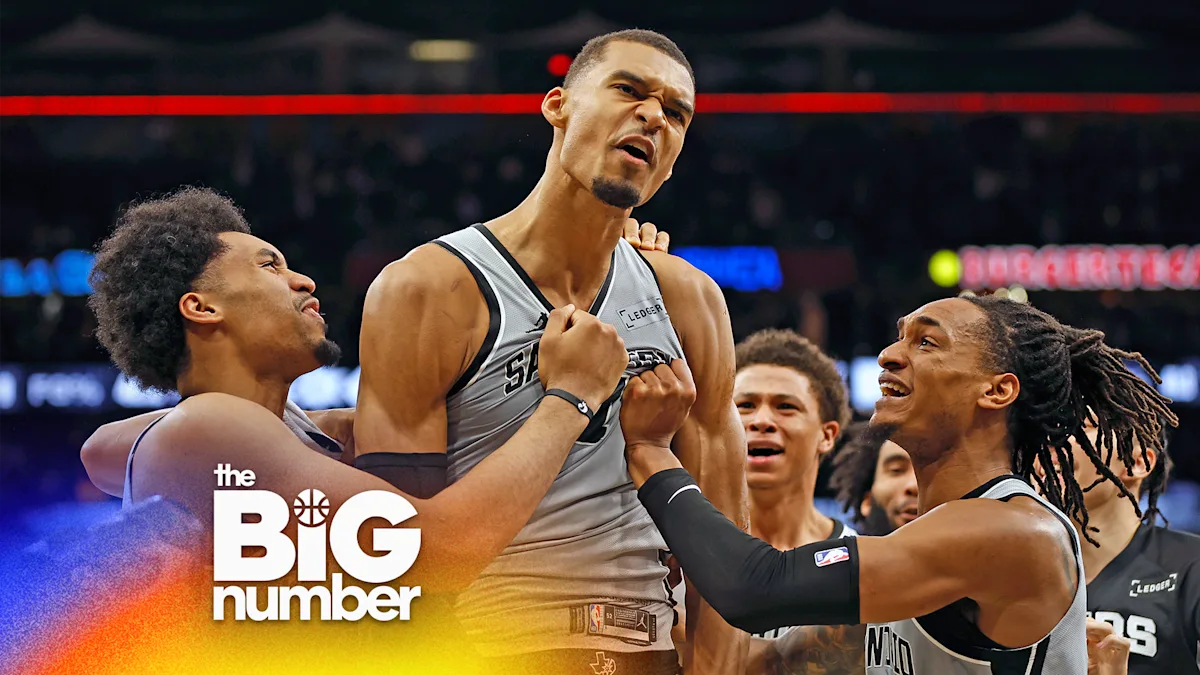
The MVP Debate: Wembanyama vs. Gilgeous-Alexander
When discussing the NBA MVP debate, it’s common to encounter various names emerging as frontrunners each season. The current talk centers on two rising stars: Victor Wembanyama of the San Antonio Spurs and Shai Gilgeous-Alexander of the Oklahoma City Thunder. The arguments surrounding who deserves this coveted title delve deep into advanced metrics, individual performance, team contributions, and overarching narratives. In this article, we analyze their cases, assess potential changes in MVP criteria, and discuss the possible NBA expansion into new markets.
The Case for Victor Wembanyama
Victor Wembanyama has taken the league by storm with his exceptional skills, combining size, agility, and a versatile offensive game. Standing at 7-foot-3, he offers a unique presence on both ends of the court, making him not just a scoring threat but also a formidable defender. Let’s examine the specifics of why his case for MVP is compelling.
Advanced Statistics
At the heart of Wemby’s MVP candidacy is his astounding +16.5 on/off swing. This metric is crucial as it indicates how the team performs when he’s on the court versus when he’s off. A plus/minus of +16.5 suggests that the Spurs are significantly better when he’s in the lineup. This stat alone speaks volumes about his impact and how he elevates his teammates’ performance.
Additionally, Wemby’s usage rate and efficiency ratings paint a positive picture. He not only scores effectively but also assists his teammates, showcasing dual-threat capabilities. By creating offensive opportunities, including stretching the floor with his three-point shooting, he diversifies the Spurs’ attack, leading to higher scoring efficiency.
Highlighting Plays
Beyond the statistics lies the narrative fueled by jaw-dropping highlight reels. Wembanyama’s shot-blocking prowess often shifts the floor balance, forcing opponents to rethink their offensive strategies. His decisive dunks and outside shooting mimic the dynamism seen in the game’s most elite players. These factors similarly contribute to his MVP dialogue while capturing the attention of both fans and analysts.
The Case for Shai Gilgeous-Alexander
While Wembanyama’s case is strong, Shai Gilgeous-Alexander has demonstrated remarkable consistency and dominance in nearly every all-in-one metric. Let’s explore what sets SGA apart in this incredibly competitive MVP race.
Dominance Across Metrics
Gilgeous-Alexander has showcased exceptional skills through various advanced metrics. He ranks at the top in several areas, including player efficiency rating (PER) and win shares. His ability to uniquely create shots, drawing fouls, and converting free throws make him an offensive juggernaut. Gilgeous-Alexander is adept at understanding defenses, using his agility and size to exploit gaps effectively.
Approaching the game with a balanced style, he contributes immensely as a passer and rebounder. His versatility challenges traditional definitions of position; he can penetrate defenses, shoot from distance, and operate effectively in post-up situations.
Momentous Performances
Time and again, SGA has provided clutch performances that are game-changing. Citing specific games, his ability to dominate when it matters most has proven crucial for the Thunder’s playoff aspirations. The resilience he shows, often carrying the load in close games, solidifies his case as a top MVP contender.
Comparative Analysis of Advanced Stats
To evaluate Wembanyama and Gilgeous-Alexander, we can juxtapose their advanced statistics to draw insights into their MVP narratives further.
-
Player Efficiency Rating (PER): This encapsulates a player’s overall efficiency on the court. While both players boast high PERs, it’s the consistency that SGA has shown over the season that gives him an edge here.
-
Win Shares: This metric breaks down a player’s contribution to team wins. While Wembanyama plays on a team that may lean on him for certain aspects, SGA’s contributions have been vital across the board.
-
Impact Metrics: Wembanyama’s on/off numbers highlight his impact during crucial game moments, but the overall performance metrics appear to favor the superior balance that Gilgeous-Alexander provides.
While these numbers tell part of the story, the narratives woven through team success and historical context often tip the scales in MVP voting.
Why the 65-Game Rule Needs Reconsideration
As the MVP debate broadens, another topic arises: the NBA’s existing rule that a player must participate in a minimum of 65 games to qualify for MVP consideration. This rule, which is ostensibly designed to promote player availability and discourage ‘load management,’ may require a reevaluation in light of the current landscape.
The Evolution of Player Management
The rigor of an 82-game season brings challenges that can impact health and longevity. Top players increasingly prioritize their long-term health, leading to a rise in load management practices, which affect games played. Wembanyama and Gilgeous-Alexander face different pressures: Wemby as a rookie adjusts to the NBA grind while SGA carries a heavier load for his team.
Resetting expectations on games played may promote more competitive balance rather than penalizing top-tier players for conscientious management. Adapting the rule could also pave the way for recognizing talent irrespective of total games played, allowing analysts and voters to weigh contributions against opportunities.
NBA Expansion: The Las Vegas and Seattle Discussion
Another crucial conversation surrounding the NBA pertains to the potential expansion into new markets, particularly Las Vegas and Seattle. The discussion involves understanding the implications for player development, team strategies, and marketability of upcoming stars like Wembanyama and Gilgeous-Alexander.
The Case for Las Vegas
Las Vegas presents a unique opportunity for NBA expansion. The allure of the city, coupled with its infrastructure, has already proven successful for professional sports teams. An NBA team in Las Vegas could potentially offer lucrative contracts and sponsorships, attracting top-tier talent to an expanding market.
The Historical Context: Seattle
On the flip side, the return of an NBA team to Seattle is highly anticipated by basketball fans. Seattle has a storied history in the league, highlighted by the former Supersonics, who produced legendary talents. Establishing a new franchise here could reignite local support and enhance the competitive nature of the league.
Conclusion: The Path Forward
As the ongoing NBA MVP debate intensifies, the performances of Victor Wembanyama and Shai Gilgeous-Alexander present fans and analysts alike with compelling narratives. Their stats provide substantial evidence, yet the true value of a player often transcends metrics. As we look ahead, consideration of adjustments in criteria and potential expansion markets adds layers to the evolving narrative surrounding the league and its stars.
In a world where both players are showcasing promising futures, the choices made today will shape the contours of the NBA for years to come. The MVP debate isn’t merely about numbers; it’s about storytelling, legacy, and recognition within the sport’s historic context, an exciting journey awaiting everyone involved.
Final Thoughts
With the season progressing, watch closely as these two players navigate the landscape while steering their respective teams toward success. The combination of passion, statistics, and the evolving landscape of the NBA creates an enriching experience for every basketball fan. The MVP award might still be months away, but the debate is alive and thrilling.