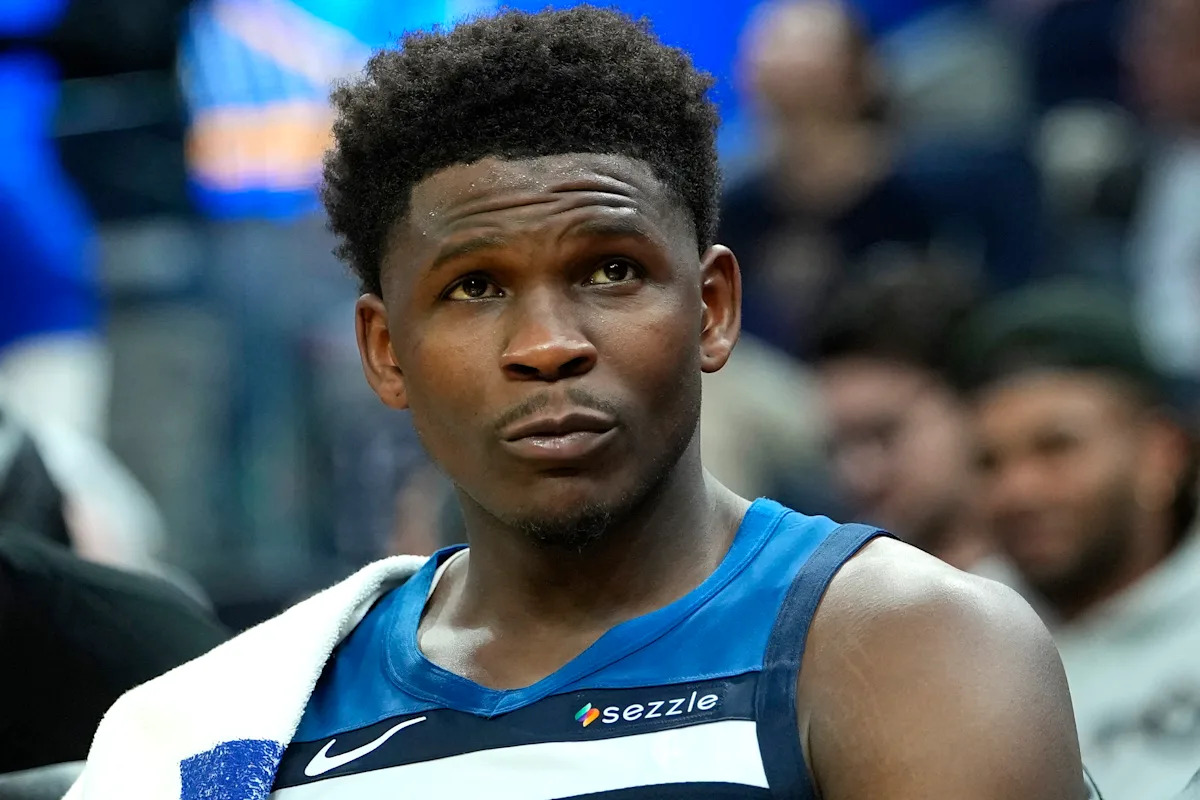
The Unfortunate Situation of Anthony Edwards: Navigating NBA Awards Eligibility Rules
Understanding the NBA’s Awards Eligibility Rules
In the world of professional basketball, few topics breed as much contention as the NBA’s awards eligibility rules. This season, these rules severely impacted key players, most notably Minnesota Timberwolves’ rising star, Anthony Edwards. Due to a series of injuries and an illness, Edwards finds himself excluded from both the All-NBA and MVP voting, missing what could have been a defining moment in his career.
Anthony Edwards: A Bright Star Limited by Circumstance
At just 22 years old, Anthony Edwards has quickly established himself as one of the league’s most promising talents. Having averaged a career-high 29.3 points per game this season, along with an impressive 49.3% shooting percentage from the field, he has proven he deserves to be in the same conversation as other elite players. Edwards received All-NBA second-team honors and ranked seventh in MVP voting during the past two seasons. His performance this season suggested he was on track to elevate his status even further.
However, basketball is a physically demanding game, and injuries are an unfortunate reality. Edwards’ case is particularly disheartening because it’s not just injuries that resulted in these missed games, but also illnesses that forced him to miss the Timberwolves’ nail-biting 113-108 loss to the Detroit Pistons. According to the NBA rules, a player becomes ineligible for awards consideration after missing a certain number of games, and Edwards’ situation epitomizes how fragile a star’s acclaim can be.
The Impact of Injuries on Player Availability
Edwards has had a rollercoaster season filled with injuries, accumulating a total of 17 absences. Initially, he missed four games early in the season due to a hamstring issue, which was followed by three missed games in December due to a foot injury. January saw him sidelined again for three games because of the same foot problem that kept him off the court.
As February transitioned into March, he was finally on the verge of proving his resilience, but he was then knocked out for six straight games due to knee inflammation. He did attempt a return, only to be struck by a cruel combination of persistent knee issues and an unspecified illness, leading to his absence against the Pistons. This unfortunate sequence of events is emblematic of a player’s hard work being undermined by the uncontrollable factors of injury and health.
The Controversial 65-Game Requirement
The NBA’s eligibility requirement stipulates that players must participate in a minimum of 65 games to qualify for All-NBA and MVP voting. The rule aims to eliminate “maintenance days” that players often take off, even if fans have purchased tickets expecting to watch their favorite superstars perform. While the intention behind the rule is admirable, its implementation has faced severe backlash, especially as major players like Edwards have fallen victim to it.
This season has seen significant controversies surrounding these eligibility rules. The recent injury to MVP candidate Cade Cunningham solidified the NBPA’s frustration, leading them to call for the outright abolition of the 65-game rule. As the NBA season progresses, even legends like LeBron James and Stephen Curry find themselves on precarious grounds regarding awards eligibility, raising concerns about how these rules may hinder players’ careers and recognition.
The Plight of Other Stars
As more stars, like Nikola Jokić, Kawhi Leonard, and Devin Booker, hover near the 65-game threshold, the larger narrative of the NBA begins to unfold. The reality that these players could face similar fates as Edwards serves as a warning.
Edwards’ case is particularly poignant because he is a young player who is still trying to carve out his identity in a league that celebrates its superstars. With previous accolades in his pocket, the chance to further solidify his status vanishes due to factors beyond his control.
Public Perception and Fan Sentiment
The sentiments voiced by fans and analysts alike suggest a growing discontent with the NBA’s policies regarding player treatment and awards eligibility. Many argue that the league seems more focused on enforcing strict rules than valuing the talents and efforts of individual players. The desire for fan engagement and retention, although well-intentioned, may have led to an oversimplified solution that doesn’t account for a player’s physical vulnerabilities.
The outcry against the rules indicates a broader issue surrounding player availability and transparency, which fans have a stake in. The essence of sports is the unpredictability of performance and the endurance of the athletes on the field. A player’s worth should not be diminished by external circumstances, which are often beyond their control.
The Ripple Effects on Team Dynamics
The impact of lost eligibility extends beyond individual players. For teams like the Timberwolves, the absence of a star player like Edwards can severely inhibit their strategies and performance. Competing in an ultra-competitive Western Conference, missing key players due to injuries—and subsequent lost accolades—can shift the entire momentum of a season.
Moreover, young players on the Timberwolves who look up to him lose the opportunity to witness their leader at his peak performance. This situation not only affects immediate play but can have lasting ramifications on team morale, cohesion, and long-term growth.
Navigating Forward: What’s Next for Edwards?
For Edwards, the road ahead requires resilience and a renewed focus on recovery. While this season may not unfold as a memorable awards season, his potential remains unshaken. Fans and analysts still believe that he is destined for greatness. However, the overarching concern lies in how the NBA will adjust its policies and recognize the voices of the NBPA and its players.
Reflections on NBA’s Future Policies
In light of Edwards’ unfortunate circumstances, it becomes evident that a reevaluation of these eligibility rules is necessary. The NBA must strike a balance between maintaining the integrity of the competition while also recognizing the human aspect of its athletes. They have a responsibility to nurture the talents that drive the league’s popularity as well.
Future policy adjustments could consider aspects like player performance metrics, injury assessments, or even allowances for unique circumstances such as those experienced by Edwards. The NBA has a golden opportunity to reshape its approach and develop regulations that are fair and equitable for all players.
Conclusion
Anthony Edwards’ predicament serves as a cautionary tale for both fans and the league regarding the fragility of success in professional sports. As he recovers, all eyes will be on him as well as on how the NBA navigates growing concerns surrounding its awards eligibility rules. In an era where every accolade is a step towards legacy-building, the pursuit of fairness and balance must remain a valuable consideration for the league. Ultimately, the focus should be on the players’ skills, perseverance, and commitment, rather than the number of games missed due to circumstances beyond their control. As the narrative unfolds, one thing is certain: the basketball community continues to rally behind Anthony Edwards, hopeful for his triumphant return and remembering the resilience inherent in both him and the sport he represents.