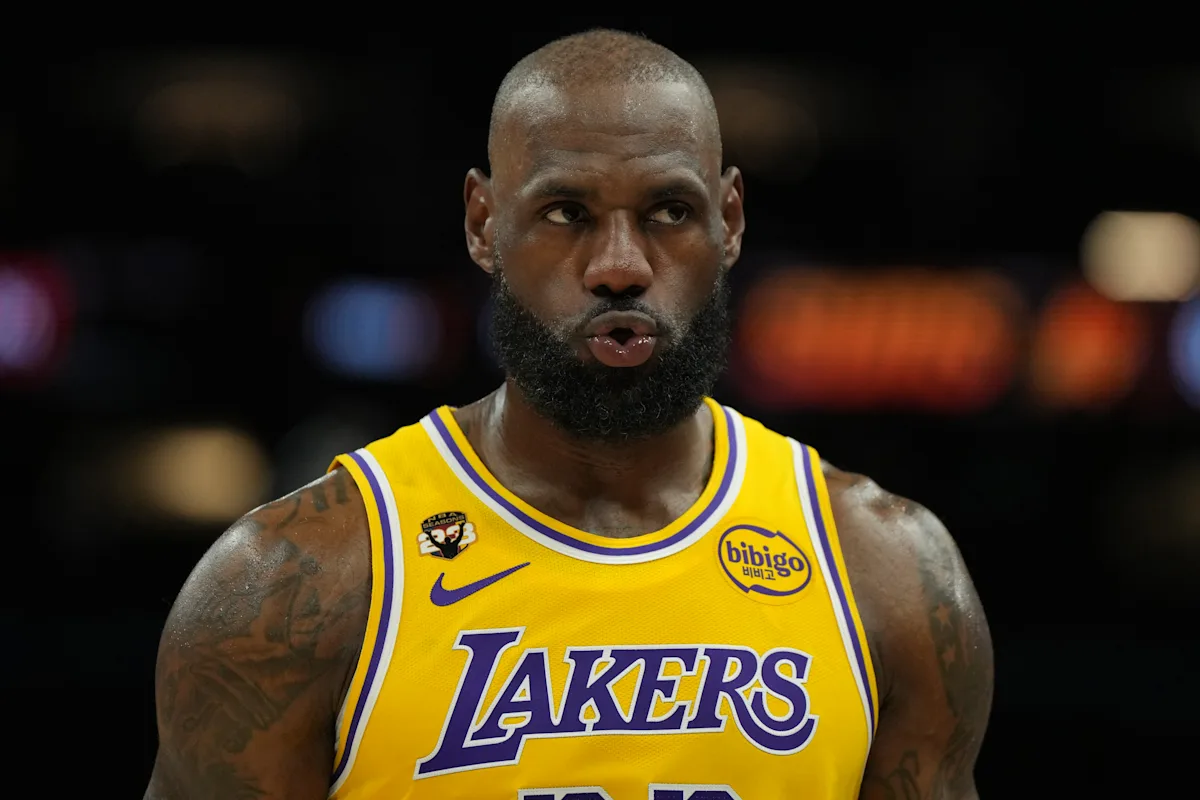
Fact or Fiction: LeBron James is the NBA’s Best Third Option
You know what’s thrilling? Watching film of Los Angeles Lakers superstar LeBron James. His ability to carve up defenses, like the Miami Heat’s zone, exemplifies his basketball IQ and skill. At 41, James has redefined his game, showcasing that even as he slows down, his impact remains monumental.
LeBron’s Transformation
LeBron James is undergoing a significant transformation in his 23rd NBA season, primarily playing as a third option. Traditionally, he commanded the ball and orchestrated plays, but this season has seen a shift in his role. With younger stars like Luka Dončić stepping up, James is evolving to fit this new narrative—one that highlights how he can still be effective without being the focal point.
This evolution raises an intriguing question: Is LeBron James the best third option in the NBA?
Understanding Third Options in the NBA
To unpack this, first, we need to define what it means to be a “third option.” Typically, the third option is a player who is capable of contributing significantly but is not the primary or secondary option. In most successful teams, the third option can create mismatches, score efficiently, and provide defensive support without demanding the same amount of touches that the primary and secondary options require.
LeBron has always exemplified excellence in adaptation. The transition to a third option is not without its challenges, but James seems to have grasped this role superbly.
LeBron’s Impact on the Lakers
The Los Angeles Lakers are built around three key players: Luka Dončić, Austin Reaves, and LeBron James. Early in the season, statistics suggested the Lakers scored better without James on the floor. In non-LeBron minutes, the team registered a positive net rating. However, since returning from injury, his performance has significantly improved the team’s scoring efficiency, reversing previous narratives.
Through extensive analysis, James’s commitment to his new role is evident. In the first 65 games of the season, his usage rate stood at 27.1%, a number indicative of his involvement compared to other high-usage stars. However, his usage has since dipped to 20.3%, paralleling league averages.
This shift hasn’t diminished his effectiveness. Rather, it allows him to focus on leveraging mismatches created through Dončić’s play while being guarded by defenders typically reserved for role players.
Transitioning Roles & Team Dynamics
This transformation hasn’t isolated LeBron’s influence; instead, it has enhanced the capabilities of his teammates. Players like Austin Reaves thrive more in their complementary roles as James adopts a less assertive shooting and distributing strategy.
Diving deeper into the dynamics at play, during the nine-game win streak, LeBron’s contributions off the ball have played a crucial role in elevating the team’s performance. The Lakers have effectively capitalized on defensive lapses when James sneaks in undetected or screens for Reaves, delaying defenders’ rotations.
Analyzing Isolation and Off-Ball Movement
What makes LeBron an exceptional third option is not merely his experience or skill but his understanding of teamwork and trust in others. Awareness and movement without the ball are critical for secondary and tertiary players. LeBron’s ability to cut to the basket, set effective screens, and become a reliable release valve for shooters make him a unique asset in this role.
He remains a threat regardless of how many touches he gets, exuding grace and power in transition score situations. His legacy as one of the game’s all-time greats allows him to motivate teammates, encouraging moments that transcend ordinary basketball.
The Lasting Effect of Trust
James’s trust in younger players like Dončić and Reaves has, in many ways, mirrored earlier phases of his career when he had to rely on players like Dwyane Wade and Kyrie Irving. He has a history of elevating the performance of those around him, and now with Dončić and Reaves, he is once again embracing that philosophy.
What separates him as a third option is an awareness of the bigger picture. Despite being the best player on the court in many scenarios, he understands there are moments when stepping back is more beneficial for team success.
The LeBron Effect: Pressure on Opposing Defenses
One of the striking consequences of LeBron’s new role as a third option is how it applies pressure on defenses. Previously, opponents would focus on him, which often opened options for others. Now, with the focus on Dončić and Reaves, James takes advantage of what defensive schemes tend to overlook.
LeBron’s physical prowess makes him a formidable cutter, capable of slipping through gaps created by defensive rotations. The defenders on him, typically the third-best on the opposing team, find it challenging to match up with someone of his experience and skill set. This scenario opens the door for mismatches that can exploit defense weaknesses.
Offensive Versatility: Key Component of Success
Despite the positional changes, the versatility of James’s playing style remains intact. Transition play, smart passing, and notable isolation opportunities still make him incredibly dangerous. The lethal combination of age and experience renders him not only an asset to the team’s current structure but also a contributing factor in the broader landscape of the league where defending a player of his caliber requires multiple strategic adjustments.
James’s elite ability to integrate his skills seamlessly into a role that allows others to shine is a significant boon to the Lakers’ offense. This adaptability and commitment to teamwork amplify individual success while steering the team’s potential.
Conclusion: The Unique Challenge of Aging in the League
As James approaches free agency, questions loom about what the future holds. The truth is, his role as the NBA’s premier third option may redefine how older players transition through their careers. His successful adaptation at 41, coupled with the ability to maintain a high level of influence and output, sets an essential precedent.
So, as we dive deeper into the story of LeBron James—the best third option in the NBA—one thing remains clear: adapt or retire. He has chosen to adapt, proving that age is merely a number when skill, intellect, and understanding converge. For now, it’s safe to say LeBron continues to be the game’s cultural and competitive benchmark, regardless of how many options might surround him.
Final Thoughts
In a league brimming with young talent and emerging superstars, LeBron James’s journey as the best third option challenges the conventional narrative. His success in this complementary role illustrates that even the greatest can adjust and thrive when sharing the spotlight. The Los Angeles Lakers may just have uncovered a dynamic formula for success that extends well beyond the 2025-26 NBA season. The fact remains: LeBron James is not just an icon; he is a master of evolution, and as it stands, he is indeed the league’s best third option.