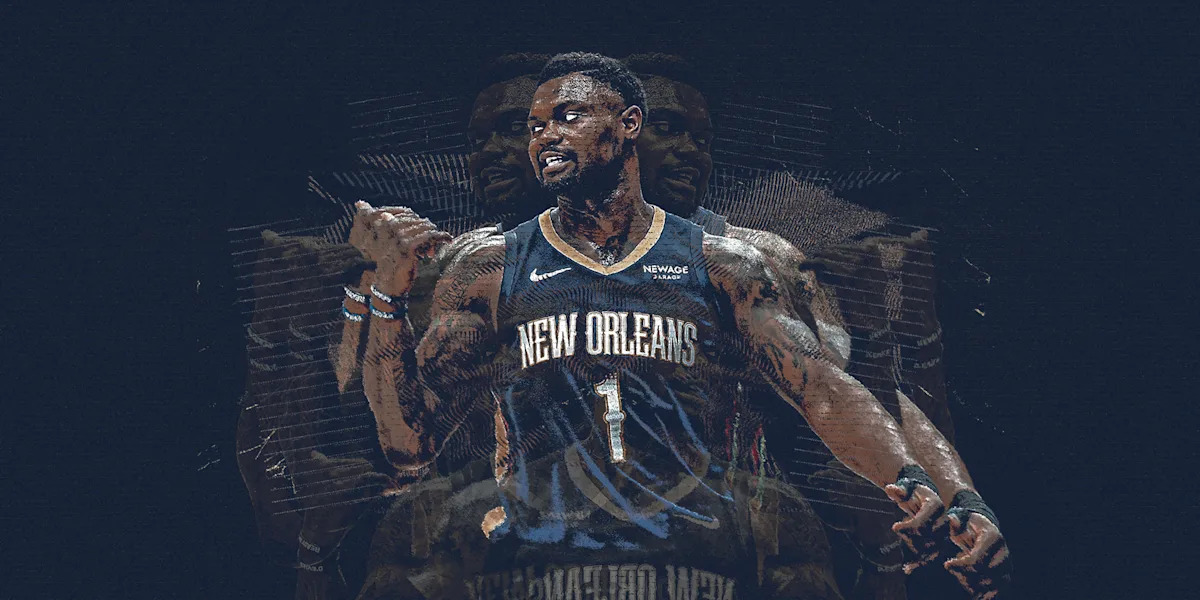
NBA Intrigue: The Zion Williamson Dilemma and Its Implications
On March 1, 2023, the New Orleans Pelicans faced off against their opponents without their star player, Zion Williamson. At first glance, this absence seemed typical. Injuries and player rest days pepper the headlines of the NBA season, and Williamson, while a star, has not been a paragon of durability. However, this occasion was different; Williamson had played in 35 consecutive games leading up to this night, marking his career-best streak. His subsequent return two days later marked a pivotal point in a season fraught with player injuries and absences. Williamson’s unexpected durability and performance amidst a floundering Pelicans squad raised questions for fans and executives alike.
A Surprising Turnaround
As the season unfolded, Williamson has astonishingly played in 59 of the 76 Pelicans’ contests, breaking the mold of typical star player injuries. While many NBA teams have dealt with their share of roster challenges, Williamson stands out as a rare consistent presence, raising both eyebrows and expectations as the offseason looms.
The implications of Williamson’s performance become even more intriguing when considering the Pelicans’ recent choices. Nine months prior, the franchise made one of the most audacious moves in recent draft history, trading up to the 13th pick to acquire Maryland forward Derik Queen. This gamble was surprising for a team seeking to build around Williamson, who they had placed in a difficult position with the addition of a prospect that did not seem to complement his style.
The Derik Queen Trade and Its Aftermath
The gamble of selecting Queen brought forth significant challenges. The pairing between Williamson and Queen early in the season was met with stark failures. Their gameplay together resembled that of a team in a downward spiral, much like the struggling Washington Wizards. Following a disheartening 15-41 start, the Pelicans surged to a .500 record after the All-Star break, leading some within the organization to believe that simplifying the roster and roles may have been pivotal for their resurgence.
The Crossroads of Zion Williamson’s Future
Despite the promising stretch of play, whispers of Williamson’s impending free agency circle through the league. Sources indicate that neither Williamson nor those close to him has received confirmation that his time in New Orleans is drawing to a close. Executive decisions loom large, especially as the franchise owes Atlanta a potentially valuable first-round pick in 2026 linked to the Queen trade.
Williamson himself has expressed total loyalty to New Orleans, making it clear,
“New Orleans is home for me. It’s where I want to be. But at the end of the day, if we’re going to be realistic about it, the NBA is a business.”
This contrasts sharply with the looming uncertainty stemming from the franchise’s hiccups. As he becomes extension-eligible this offseason, many executives are speculating a potential trade, especially given his unique profile.
The Dual Nature of Zion Williamson
The question remains: Should other teams across the league feel a sense of urgency at the prospect of acquiring Williamson?
On one hand, the reasoning stands strong. Williamson is not yet 26 and is a former No. 1 overall pick, bolstered by two All-Star appearances. His current form places him among the league’s most effective isolation scorers, making him a coveted asset in a business that has become increasingly cautious with salaries and contracts.
“He’s on another level in terms of his drives,” observes Knicks head coach Mike Brown, highlighting the apparent athletic prowess that Williamson exudes on the court.
The Skeptical Counterargument
Conversely, the weight of skepticism around Williamson’s trading viability cannot be ignored. Critics point to his underwhelming defensive stats and issues on the boards, along with a concerning injury history. Despite a season that shows signs of rejuvenation, critics stress caution, particularly regarding his hefty contract that guarantees $42.2 million next season.
A Western Conference executive remarked, “Right now, he’s a borderline All-Star who makes a lot of money. That’s the sort of player a lot of teams are now avoiding.”
The Paths that Lead Forward
Diving deeper into the statistical and qualitative data surrounding Williamson reveals potential for a return to All-NBA form. The dip in his performance metrics could be attributed to how the Pelicans utilize him in their system. As interim head coach James Borrego noted, Williamson is being utilized in different off-ball actions aimed at increasing his effectiveness on offense.
Interestingly, Williamson turned the ball over at a career-low rate and has exhibited skillsets that hint at markedly improved efficiency—perhaps elements of his gameplay previously lost amidst injuries.
Health and Preparation
Despite the nagging doubts, many around the league attribute his health this season to a massive shift in his off-court regimen. Williamson has adapted to using modern recovery technologies and has taken a more involved approach to body management.
“It’s about management of my body,” he shared, referencing the impactful changes and the new trainer he has brought into his camp. His commitment to treatment is visible, earning him respect from teammates and coaches alike.
“Taking the management of his body more seriously than ever,” says teammate Trey Murphy—a testament to Williamson’s ongoing quest for peak performance.
The Decision Makers and Future Directions
While the teams considering a trade might possess less insight than the Pelicans, the team itself faces profound decisions. A playoff-bound team seeking more offensive punch or a rebuilding team in need of a star might be weighing the risks versus rewards.
As Williamson puts it abstractly and philosophically, “I feel like we’re taking a step in the right direction because at the moment we can only control what we can control.”
This statement resonates deeply with the Pelicans’ larger strategy moving forward, which involves not just building around their most significant star but ensuring that that star continues to thrive in an environment conducive to both personal and team success.
Conclusion: The Shifting Landscape of NBA Assets
In an NBA season characterized by injuries and absences, Williamson emerges as a genuine outlier—crafted by hard work, determination, and a willingness to adapt. As the Pelicans hover in transitional waters, the future remains murky, but one thing is clear: Williamson’s status hangs in a delicate balance between expectations and uncertainties.
The question of whether he stays or goes will create ripples across the league, captivating the attention of teams, fans, and analysts. The potential for a player with his talent, coupled with his newfound endurance, presents both opportunities and dilemmas—refreshing promise to some and daunting risks to others.
As the Pelicans contemplate their path forward, Williamson remains an enigmatic yet pivotal figure ripe with competitive potential—poised to redefine the conditions of not only his future but that of the teams eager to court him. Future decisions will inevitably shape the landscape of the NBA, making the looming offseason a pivotal period for all involved.