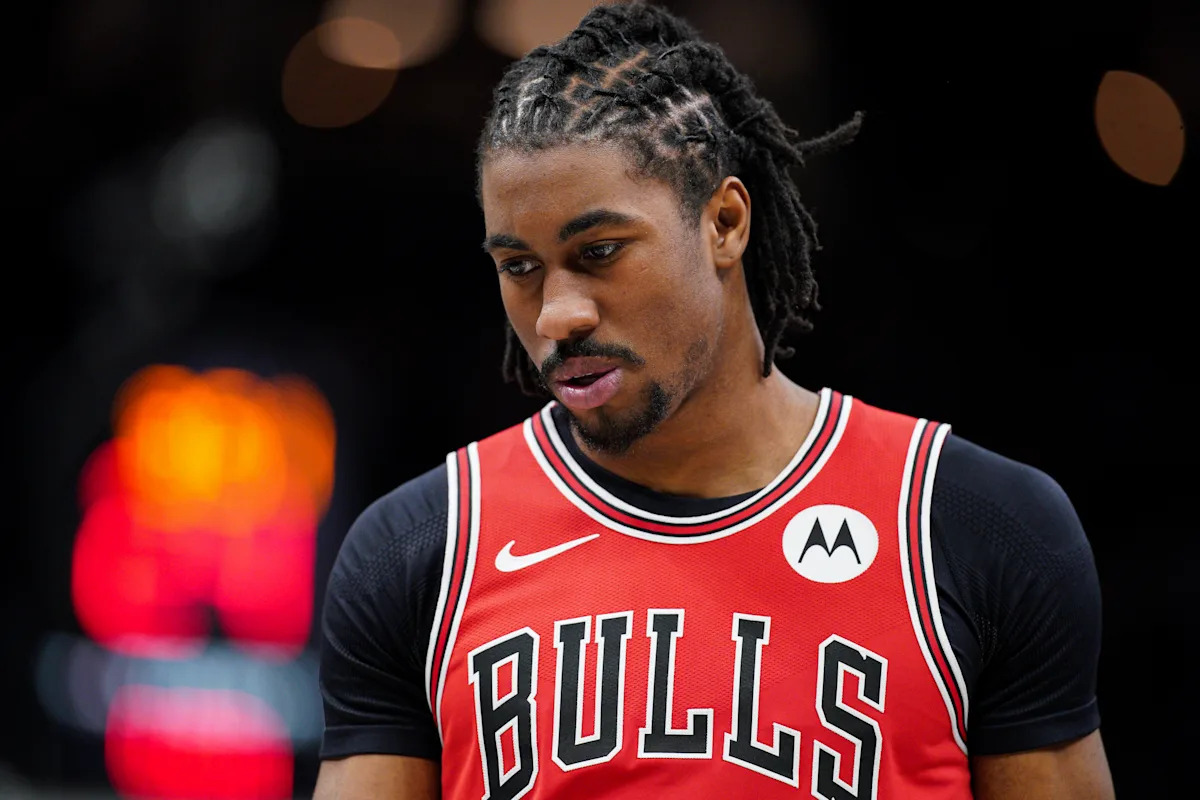
The Fallout Surrounding Jaden Ivey: Chicago Bulls Waive Controversial Shooting Guard
The recent decision by the Chicago Bulls to waive shooting guard Jaden Ivey has sent ripples across the NBA landscape. The announcement was made on a Monday, and the official statement cited “conduct detrimental to the team.” This decision marked a significant turning point in Ivey’s career, raising questions about the intersection of personal beliefs, professional conduct, and team dynamics in modern sports.
The Conduct That Led to Ivey’s Waiving
Ivey’s termination from the Bulls came shortly after he took to social media to express his religious beliefs, which included controversial remarks about the LGBTQ community. He openly criticized the NBA for its celebration of Pride Month, labeling it as “unrighteousness.” His vocal disapproval stirred tensions within the league, as it called into question the boundaries of personal faith versus professional obligations.
In a heartfelt rant during an Instagram Live session, Ivey said, “The world proclaims LGBTQ, right? They proclaim Pride Month and the NBA does too. They show it to the world. They say, ‘Come join us for Pride Month to celebrate unrighteousness.’” This declaration not only showcased his religious convictions but also placed him at odds with an organization increasingly committed to inclusivity.
The Bulls’ Response
Prior to the game against the San Antonio Spurs, Bulls head coach Billy Donovan addressed the media, explaining the rationale behind Ivey’s waiving. “Just inside the Bulls, we have people from all different kinds of backgrounds,” Donovan stated. He emphasized the team’s commitment to respect and professionalism, acknowledging that certain standards need to be upheld for the organization to function cohesively.
The decision to part ways with Ivey reflects a growing trend in professional sports where teams prioritize their public image and organizational culture. Donovan articulated a vision where diversity and mutual respect are non-negotiable aspects of the team’s ethos.
Ivey’s Rebuttal
In a twist of events, Ivey went on social media shortly after his release to challenge the Bulls’ narrative. “They’re liars, bro,” he argued. “This is lying. They’re lying saying my conduct is detrimental to the team.” He insisted on his role as a good teammate, countering the claims that had led to his departure.
His message resonated with a segment of fans who sympathized with his Christian beliefs, drawing a line between personal conviction and public scrutiny. “All I’m preaching about is Jesus Christ, and they waived me. But they say I’m crazy, right? I’m psycho,” Ivey declared, framing his dismissal as a persecution for his faith.
The fallout from his comments set the stage for a larger conversation about the responsibilities of athletes as public figures and the potential repercussions of their personal beliefs.
The Road to Waiving: Ivey’s Short Tenure with the Bulls
Jaden Ivey was acquired by the Chicago Bulls during a three-team trade in February that aimed to provide salary-cap relief. Alongside veteran guard Mike Conley, Ivey joined a roster looking to bolster its performance. However, his time with the Bulls has been marred by challenges—he appeared in only four games, including three starts, before being ruled out for the season due to a knee injury.
The injury had plagued him since the beginning of the season, causing him to miss 15 games early on. This gap in playtime disrupted his ability to integrate into the team effectively. Before his injuries, Ivey had flashed potential during his rookie season with the Detroit Pistons, averaging 17.6 points, 4.1 assists, and 4 rebounds before a serious leg injury sidelined him.
Complex Relationship with Injuries
Ivey’s repeated injuries have led him to question his professional trajectory. In an earlier interview, he candidly stated, “I’m not the same player I used to be.” His physical challenges have posed not only a personal hurdle but also a professional one, as he grappled with identity and performance in an environment that demands consistent excellence.
The combination of his personal convictions and injuries culminated in an unpredictable situation for the Bulls, leading to Ivey’s eventual release. For an athlete once regarded as a rising star, the abrupt end to his tenure in Chicago raises questions about the future.
Basketball and Personal Beliefs: A New Paradigm?
The events surrounding Ivey have ignited intense debates about the balance between personal beliefs and professional expectations. The modern sports landscape is increasingly reflective of societal norms, demanding inclusiveness and tolerance. Athletes are often in the spotlight, and the scrutiny of their personal beliefs can impact not just their careers, but also the organizations they represent.
While many view Ivey’s comments as detrimental, others see a misguided attempt at expressing personal faith. His case serves as a pivotal moment for athletes and teams navigating these sensitive topics, revealing the underlying tensions that exist in the professional sports world.
The Broader Implications: Beyond One Player
Ivey’s dismissal raises broader issues about how organizations deal with controversial statements made by their players. As social media amplifies voices—often without context—teams face challenges in maintaining a unified public image. The stakes are high, as any misstep can not only affect team dynamics but also lead to potential backlash from fans and sponsors.
The Chicago Bulls, known for their storied history and legacy, have chosen to uphold certain standards in dealing with matters affecting their public image. Whether this approach is effective or sustainable will likely depend on how well they can foster a supportive environment without alienating individual beliefs.
Looking Ahead: What’s Next for Jaden Ivey?
The future for Jaden Ivey remains uncertain. Challenges related to his physical health, combined with the recent fallout, will require significant introspection and resilience. The opportunity to start fresh with another team could be on the horizon, but the stigma attached to his comments may complicate that journey.
Ivey’s situation exemplifies how personal beliefs can intersect with professional responsibilities, resonating far beyond the basketball court. As he moves forward, the question remains whether he can both advocate for his faith and find a place in a league increasingly attuned to diversity and inclusivity.
Conclusion
The incident involving Jaden Ivey and the Chicago Bulls serves as a microcosm of contemporary issues within sports culture. As teams navigate the complexity of identity, conduct, and public image, the landscape will continue to evolve. While Ivey grapples with the consequences of his beliefs, organizations like the Bulls will need to adapt to the ever-changing dynamics of sports, inclusivity, and the role of personal conviction in public life.
The case of Jaden Ivey offers valuable lessons for athletes, teams, and fans alike, urging a nuanced understanding of how personal beliefs can coexist with professional obligations in a world that is increasingly interconnected yet diverse. As the dialogue continues, one can only hope for greater empathy and understanding in the realm of sports.