Who Doesn’t Love a Great Return?
Who doesn’t love a good return, am I right? Your favorite artist making new music, a superhero saving the day, or a TV couple finally answering the ever-pertinent “Will they or won’t they get back together?” question. There’s a unique joy that comes with these moments; it’s as if anything is possible. Think about it: Jon Snow rose from the dead, Snooki went back to the Jersey Shore house, and order has been restored.
Basketball’s Iconic Returns
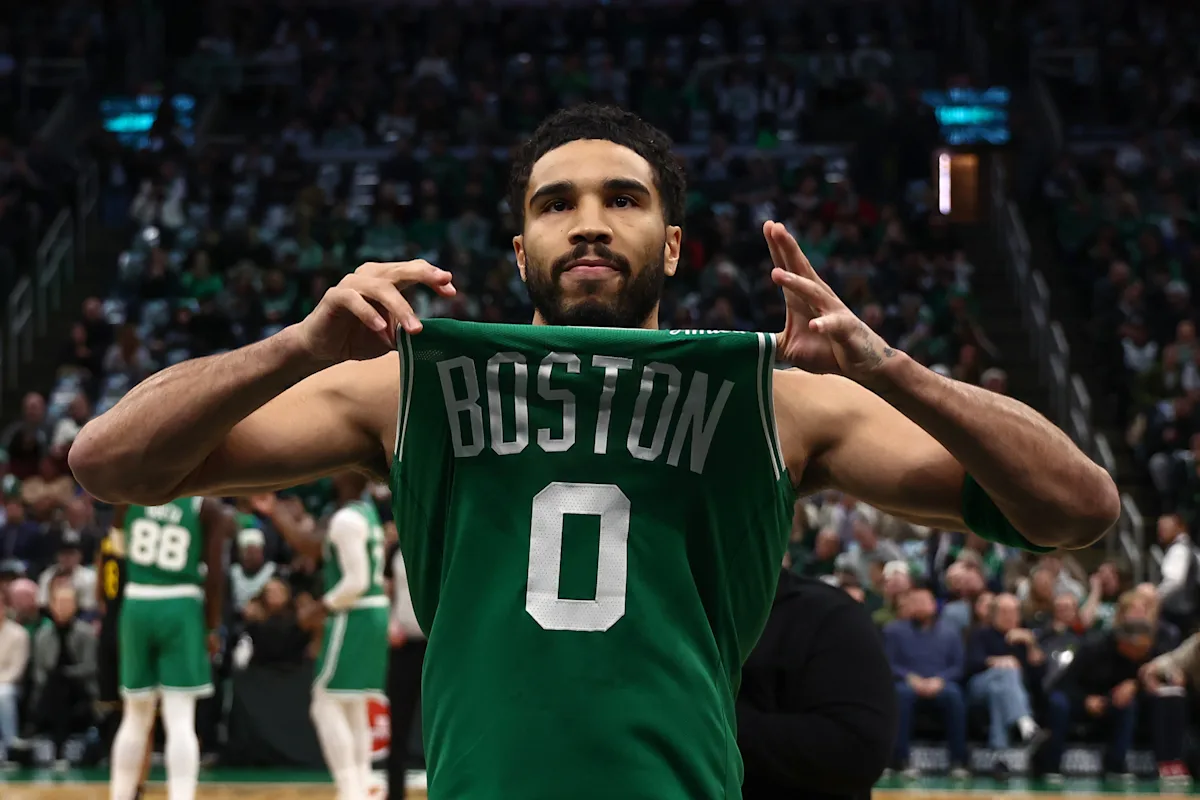
Basketball, of course, has had its fair share of memorable returns, too. From “Here comes Willis!” to Magic Johnson’s unforgettable performance at the 1992 All-Star Game, the sport has seen countless athletes rise to the occasion. Not to mention Michael Jordan’s iconic “I’m back” announcement, which sent ripples throughout the NBA community. Recently, we witnessed another significant return—Jayson Tatum’s comeback after a severe injury.
The latest entry into this pantheon of dramatic comebacks is, of course, Jayson Tatum, who went from dealing with a ruptured Achilles in May 2025 to playing NBA basketball in March 2026. That feat alone deserves applause; the effort and sheer determination to make it happen are commendable.
However, the second that moment sticks, the wave of joy is often followed by a harsh reality: “What’s next?” The intensity of the games increases, and that adrenaline sometimes gets replaced with the weight of expectations. These expectations could be amplified by the Boston Celtics being the No. 2 seed in the Eastern Conference or the All-NBA form Tatum displayed before his injury. The question now arises: how do we evaluate a player who wasn’t expected to return so soon on a team that wasn’t predicted to achieve this level of success?
The Reintegration of Jayson Tatum
The Boston Celtics have gone 6-2 in games that Tatum has played since his return, which hopefully allows us to set aside the prolonged Jaylen Brown/Tatum discourse for just a beat. Although the two star players have that nostalgic familiarity, there’s always a reintegration process that has to be navigated.
Throughout the season, the Celtics’ roster has risen to the occasion. Offensively, sans Tatum, they displayed stellar ball movement in the half-court, emphasizing drive-and-kick plays, seamless off-ball movements, and, of course, a heavy reliance on three-pointers. A significant part of that offensive cohesion doesn’t need to vanish with Tatum back on the court; instead, it might actually create a larger margin for error. As he finds his rhythm and confidence, having established plays can relieve some of the pressure from Tatum to be the sole playmaker.
Something that often flies under the radar is how the Celtics’ offense opens up shots and opportunities for Tatum. Jaylen Brown has had a phenomenal season, and when he drives, defenses face a critical choice. A wing isolation with Tatum one pass away forces a dilemma: open the driving lane for Brown or commit a defender to help, thereby paving the way for Tatum to catch and shoot. While any misses from Tatum might feel louder due to the high expectations, the quality of those shots and the pressure exerted by the defense are aspects the Celtics will gladly accept day in and day out.
Using Tatum and Brown together in actions can also yield dividends, but let’s be real—most defenses are going to switch. Since Tatum’s return, I have begun to notice what I call the “wave effect.”
The Wave Effect
Once a defense has to consider one high-caliber player on one side of the floor, it creates a flowing opportunity for another to attack on the opposite side. A quick dribble hand-off to Brown often results in unnecessary help initially, leading to an advance pass to Tatum, who can then attack a tilted defense. This subtle movement allows Boston to blend their offensive strategies and maximize their court presence.
Flashes of the ‘Old Tatum’
According to tracking data from NBA.com, Tatum averaged 10.3 drives per game last year. Remarkably, he’s maintained that level, recording about 9.7 drives per game since his return. Why is this significant? This statistic implies he has largely maintained his pre-injury playing style. Additionally, a player’s willingness to drive the basketball post-injury is an essential indicator of their current physical and mental state.
Tatum has shown that willingness, and it matters because he is a rhythm player. One question often arises in basketball discussions: does the drive set up the shot, or does the shot set up the drive? The clearest glimpses of the “Old Tatum” are often displayed during his strongest drives. His patience, craft, and synchronization may sometimes seem at odds, but the willingness to drive shows confidence and ability.
The Celtics have also made it easier for Tatum to facilitate these drives by setting high screens aimed at generating momentum for either a pull-up three or a drive into the paint. They’ve strategically shaped Tatum’s comeback by ensuring he gets opportunities to gain forward motion, whether it is through trailing actions in transition or providing him with space to work through a flare screen.
Tatum’s Passing Skills
One noticeable aspect of Tatum’s game since his return is his improved passing. Before his injury, he was already developing as a playmaker, but his seamless transition back into reading opposing defenses has been impressive. He’s quick, decisive, and remarkably accurate once he identifies how the defense is responding to him.
What Tatum Adds to the Celtics
The element Tatum brings back to the Celtics is not just skill or statistics—he acts as a pressure point. Boston has employed Tatum as a screener to help create advantages, and when initial plays break down, his presence carries more significance. Tatum’s ability to screen becomes especially impactful in matchups where the defense is hesitant to switch a specific player onto him. Just one small decision can lead to a scoring opportunity for Tatum or his teammates.
Whether screening wide to prevent defenders from going under or slipping past the defender to cut towards the rim, Tatum shows he can still perform the little things that make a big difference.
Additionally, the Celtics have occasionally set screens for Tatum to target favorable matchups in a more traditional manner. The key is to maintain consistent pressure against the opposing defense.
In one particular play against Phoenix, for instance, Sam Hauser set a screen for Tatum, who expertly took one dribble to the right before immediately re-cutting left. This quick movement combined with Hauser’s roll secured the switch, allowing Tatum to penetrate the paint and create scoring opportunities.
Understanding how to screen for favorable matchups is not limited to “on-ball” actions; it can also be utilized effectively in off-ball situations. Boston has diversified its strategies to involve Tatum as a screener without revealing the ultimate goal of the play.
Tatum often sets back screens, immediately looking to slip toward the post. This tactic tests the defense’s capabilities—will they falter at the initial move or will they stay organized?
What’s crucial during this reintegration process is recognizing the impact Tatum can have, even if it doesn’t always shout loudly from the box score. The Celtics can fully exploit Tatum’s skills without drastically altering their well-established game plans.
Head Coach Joe Mazzulla recently remarked that Tatum is “giving the game what it needs,” a comment that reflects the centralized role Tatum plays in shaping their strategy.
How Tatum has Looked on Defense
Lastly, Tatum’s defense was one of the bigger question marks upon his return. I wasn’t concerned about his 1v1 capabilities; rather, I questioned how he would fit into the Celtics’ overall defensive strategy. The Celtics’ defense demands multiple efforts: squeezing out help, recovering to assigned players, and closing out on perimeter shots.
One of the more intriguing components of Boston’s defensive scheme this year has been their different methods of providing help and collapsing on drives. Sometimes this coverage is aggressive; other times it’s subtle. Regardless, it largely succeeds in containing opponents.
By and large, Tatum has fit into this schema quite well. Although his contributions may not be extravagantly lauded, they embody the honest work needed on the court. His weak-side defense has been effective, he knows when to switch, and he’s generally effective in containing dribble penetration.
What makes the next phase intriguing is observing how opposing teams will choose to initiate their attacks against him. Are teams going to target him, forcing him to engage in multiple defensive actions? Will they test his ability to guard on the move? These are aspects that could become significant, especially as the playoffs approach.
Final Thoughts
As we navigate through this intricate web of returns, reintegration, and rebounds, it’s vital to recognize that each element plays a crucial role in building a cohesive unit. There is a compelling underlying mental dimension that we, as spectators and analysts, might not fully grasp. Returning to the court is often as much a battle of the mind as it is a test of physical prowess.
For Jayson Tatum, the key lies in balancing the desire to immediately resume his previous stature while understanding that the path to that return may look different each day. Instead of focusing solely on perfection, it’s about progress—about building on those moments, stacking them together, and advancing continuously.
The Celtics and Tatum are in a beneficial partnership, and the questions may arise as to how far that will take them. One thing is for certain: as long as they share the court, they possess the potential to create an impressive impact together.